The Psychology Behind Fear of Flying
Reviewed by Capt. Alex Gervash, Commercial Pilot and Fear of Flying Therapist. Last updated October 2026. Editorial standards.
Why your mind creates fear where there is no danger - and what to do about it
Fear of flying is rarely about flying itself. This guide unpacks the cognitive distortions, control illusions, safety behaviors, and deep psychological patterns that sustain aerophobia - and shows you the path to understanding and freedom.
Key Takeaways
- 1Fear of flying is rarely about flying. It is about loss of control and uncertainty.
- 2The illusion of control is one of the biggest psychological drivers of flight anxiety.
- 3Safety behaviors like checking weather or gripping armrests actually maintain fear.
- 4Cognitive distortions such as catastrophizing make unlikely events feel inevitable.
- 5Evidence-based psychological approaches can break the cycle of avoidance and fear.
What fear of flying is really about
Fear of flying is almost never about the airplane. It is a nervous-system response to loss of control and uncertainty. The DSM-5 classifies it as a specific phobia, situational type (code 300.29).
- Prevalence. Roughly 25 to 30% of adults experience some fear of flying. About 6 to 7% meet full clinical criteria for aerophobia.
- Treatability. One of the most treatable anxiety conditions. Most clients see meaningful change in 6 to 12 sessions of evidence-based work.
- Core drivers. Loss of control, catastrophic thinking, safety behaviors, past traumatic experiences, anticipatory anxiety.
- Why facts alone do not help. Anxiety is regulated by the autonomic nervous system, not the rational mind. Statistics correct the thinking, not the body.
- What actually works. EMDR, Somatic Experiencing, CBT, ACT, Polyvagal-informed practice, often combined.
In 16,000+ cases I have seen the same thing. Underneath the racing heart and the avoidance is one of two engines: loss of control or uncertainty. You cannot see the pilots. You cannot influence the route. You cannot step out. You cannot verify, in real time, that everything is going to be fine. For a particular kind of nervous system, especially one that already values control elsewhere in life, that combination is the perfect storm. Drivers feel safer than passengers, even though driving is statistically more dangerous. The illusion of control suppresses anxiety, even when the math says otherwise.
Clinically, fear of flying is a specific phobia in the DSM-5, situational type. It affects roughly 25 to 30% of adults to some degree. About 6 to 7% meet the full criteria for aerophobia. And here is the part most people miss: it is one of the most treatable anxiety conditions out there. Most clients see real change in 6 to 12 sessions of evidence-based work.
Five psychological drivers show up over and over. One: the illusion of control. Two: catastrophic thinking, where every bump becomes "the wing is about to break." Three: safety behaviors, like checking weather obsessively or watching the cabin crew's faces, which feel protective but actually maintain the fear. Four: past traumatic experiences, often unrelated to flying itself. Five: anticipatory anxiety, where the dread of the flight is worse than the flight.
Each of these has a way out. EMDR, Somatic Experiencing, CBT, ACT, Polyvagal-informed work. The articles below show how, with concrete examples from real cases.
Frequently Asked Questions
Is fear of flying a real mental health condition?
Yes. The DSM-5 lists it as a specific phobia, situational type, code 300.29. It affects roughly 25 to 30% of adults to some degree and about 6 to 7% meet full clinical criteria for aerophobia. It is one of the most treatable anxiety conditions when addressed with evidence-based work.
Why is loss of control such a big driver of fear of flying?
Because the brain's threat-detection system equates control with safety. Driving, the illusion of control suppresses anxiety, even though driving is statistically more dangerous. On a plane, you cannot influence anything. The route, the speed, the altitude, the response to a bump. For nervous systems that already run on control elsewhere in life, surrendering it for 8 hours at 35,000 feet is the actual trigger. The flight is the stage. Control is the play.
What are safety behaviors and why do they make fear worse?
Things anxious flyers do to feel "safer." Checking the weather obsessively. Gripping the armrest. Watching the cabin crew's faces for signs of worry. Mentally rehearsing emergencies. They feel protective in the moment. They teach the nervous system that the flight was only "survived" because of them. The next flight starts at the same baseline anxiety plus another layer of dependence on the behavior. Treatment gently reduces safety behaviors so the nervous system can update its prediction.
What is catastrophic thinking?
The brain's habit, under threat, of leaping from a neutral cue to the worst possible outcome. A bump becomes "the wing is about to break." A sound becomes "that's not normal." The leap is invisible from the inside. It feels like you are reading the situation correctly. CBT and ACT teach how to spot the leap and disengage from it without arguing with it.
Which therapy works best for fear of flying?
There is no single "best" therapy. The right approach depends on what is driving the fear. CBT works well for catastrophic-thinking-driven fear. EMDR and Somatic Experiencing work better when the root is past trauma. ACT works well for clients who want to fly without first eliminating all fear. In our 16,000+ case practice we usually combine modalities. A CBT layer for the thinking. A somatic layer for the body. EMDR or Brainspotting for any trauma roots.
Can fear of flying be cured?
Yes, with realistic framing. Most people who complete a structured fear-of-flying program can fly comfortably again, often without any pre-flight ritual. "Cured" does not mean never feeling a flicker of nerves. It means the flicker stays a flicker. Your life is no longer organized around avoiding flights. That outcome is achievable in 6 to 12 sessions for most clients.
Sources & References
Claims in this guide are drawn from the following primary sources. Where a number, statistic, or safety claim appears above, it is traceable to one of these references.
- Diagnostic and Statistical Manual of Mental Disorders, Fifth Edition (DSM-5-TR). American Psychiatric Association,
- The Polyvagal Theory. Stephen W. Porges, W. W. Norton & Company,
Articles in This Guide
 1📖 Long Read
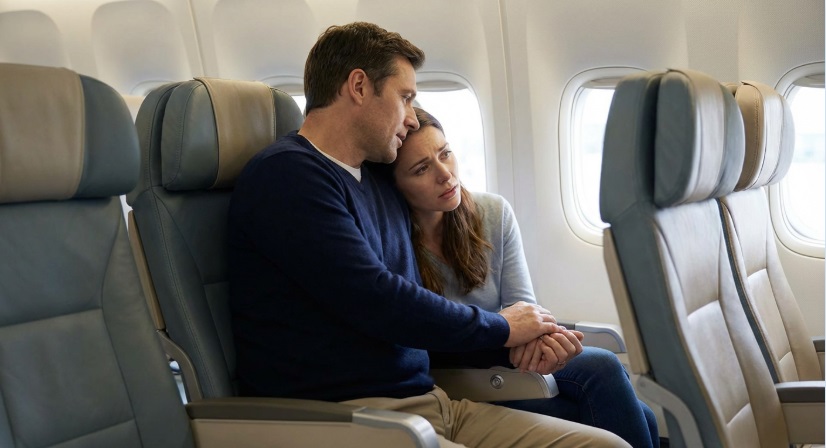
The Partner's Guide — How to Help Someone You Love Who Is Afraid of Flying
You love someone who is afraid of flying. You have tried reasoning, statistics, and logic. None of it has worked. A guide for partners on what actually helps — and what makes it worse.
 2📖 Long Read
Night Flights, Long-Haul Anxiety, and the Fear of Sleeping on a Plane
Night flights trigger a specific, deeper kind of fear. The darkness, the duration, the inability to sleep — a pilot-therapist explains why and offers practical strategies for long-haul flights.
 3📖 Long Read
From Avoidance to Acceptance — The Journey of Overcoming Fear of Flying
You have not flown in a while. Maybe months. Maybe years. But some part of you still believes things could be different. A pilot-therapist maps the honest journey from avoidance to freedom.
 4
4The Illusion of Control: Why Letting Go is Safe
Control in our daily lives is largely an illusion. Your fear in the plane is not actually about the plane—it comes from your history.
 5
5The Control Myth: What We Actually Control in Life
You can't lose what you never had. We control almost nothing in life, yet most of us are fine with this.
 6
6Why We Fear Flying: The Hidden Link to Your Past
Your fear of flying might have nothing to do with airplanes at all. When you feel anxious on a plane, your brain is actually reacting to something from your past.
 7
7Why You Think You'll Be 'The One': Understanding This Bias
Two airplanes take off every second worldwide. So why do so many believe they'll be "the one" when something goes wrong?
 8
8Your Brain's Barcode Scanner: How Fear Actually Works
Imagine a supermarket barcode scanner. Your amygdala works the same way - scanning for danger patterns from your past.
 9
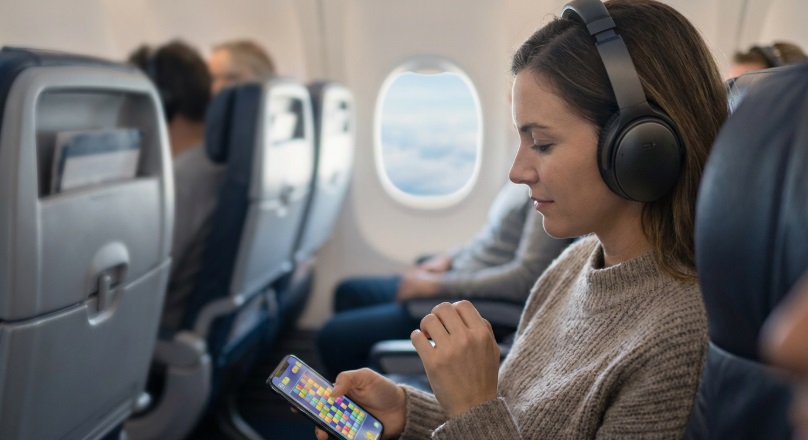
9Why Distraction During Flight Doesn't Help
Distracting yourself during flights seems smart, but it actually reinforces your fear. Here's what works better.
 10
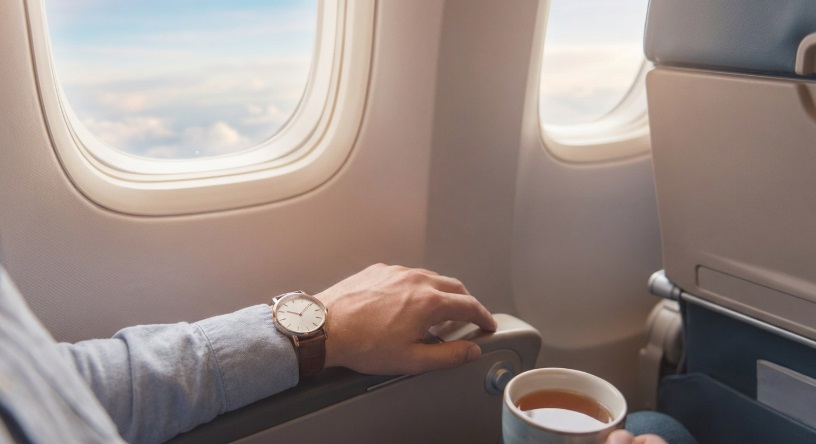
10Why Constantly Checking Flight Time Remaining Makes It Worse
Obsessively checking flight time feels like managing anxiety, but it's actually making everything worse.
 11
11Why Checking the Weather Before Your Flight Makes Anxiety Worse
Checking the weather before flying seems logical, but it actually reinforces your anxiety. Here's why.
 12
12Stop Checking Airline Reviews Before Your Flight
Searching for airline reviews before flying feels smart, but it's making your anxiety exponentially worse.
 13
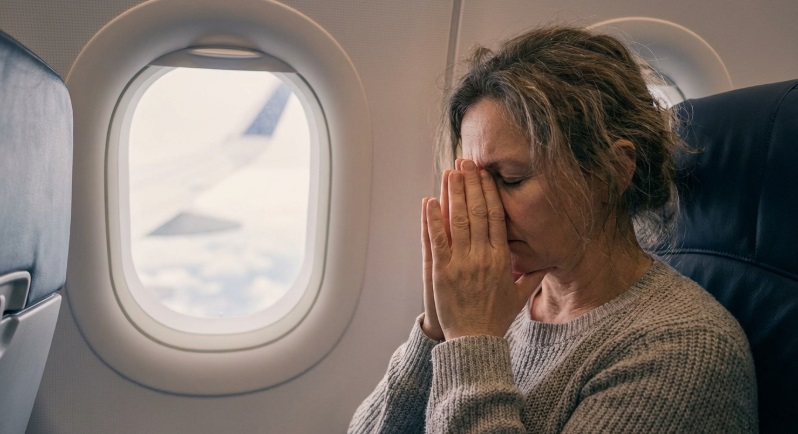
13Stop Praying Only on Airplanes
Praying only before flights seems spiritual, but it's actually a safety behavior that reinforces fear.
 14
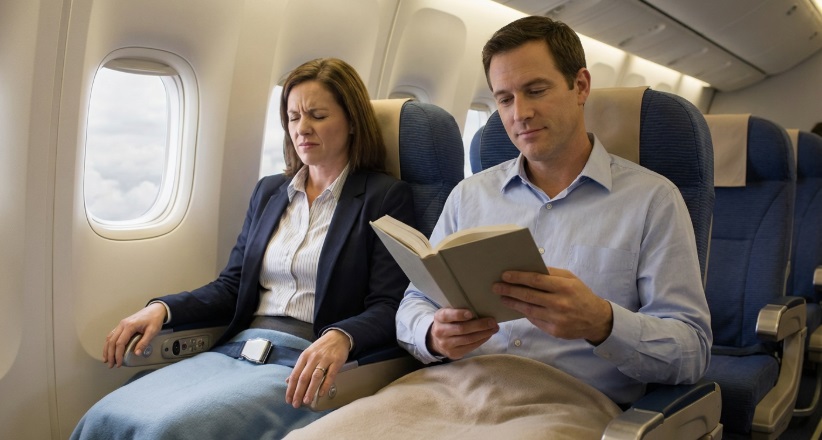
1410 Logical Distortions of Fear of Flying
The harmful thought patterns that 30% of passengers have - and why they seem so logical to an anxious mind.
 15
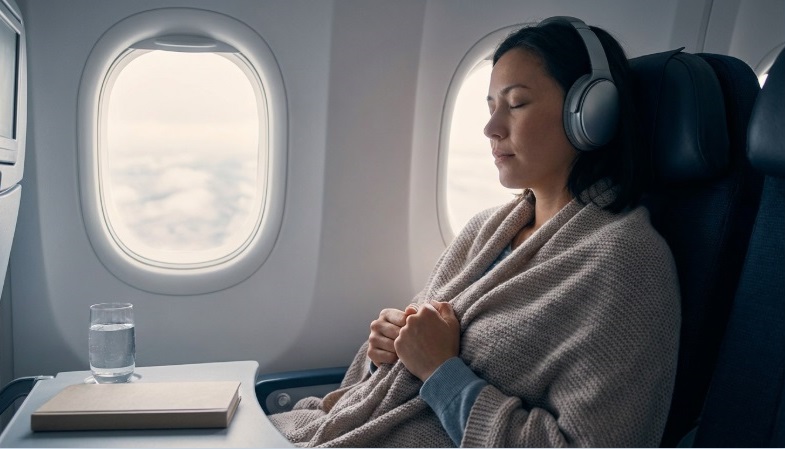
15The Mental Trap: "Yet Something Can Go Wrong"
Dissecting the thinking pattern that keeps fearful flyers trapped in anxiety, and why it has nothing to do with actual safety.
 16
16What are the real reasons for the fear of flying?
Discover the psychological roots behind aviophobia and why your fear may not be about flying at all.
 17
17In Fact, Any Child Understands This Simple Truth
Any child understands: you can't lose something you never had. So why do we believe we "lose control" on planes?
 18
18When Safety Feels Like a Threat
One of the most unpleasant aspects of anxiety is that it forces us to focus on threats and ignore safety signals.
 19
19Can Logic and Knowledge Defeat Fear of Flying?
Why rational understanding alone isn't enough to overcome fear of flying, and what really works.
 20
20Feeling Lonely in the Sky
Passengers don't see what pilots see—sometimes the sky is swarming with aircraft. The feeling of isolation has deep psychological roots in early childhood.
 21
21Why I Didn't Have Fear of Flying Before?
Many assume fear of flying is congenital. It's not. By birth, the baby's brain is only 12% formed—a blank slate with no room for existential fears. So why does it develop later?
 22
22Threat Feeling vs. Actual Threat
Understanding the crucial difference between feeling unsafe and actually being in danger during a flight.
 23
23Fear of Flying Statistics 2026: What the Data Really Shows
Comprehensive analysis of fear of flying statistics in 2026 - prevalence rates, demographics, economic impact, post-COVID trends, and treatment success data from 16,000+ clients.
 24
24Best Fear of Flying Courses Compared: SOAR vs BA vs easyJet vs phobia.aero (2026)
Detailed comparison of the top fear of flying programs in 2026 - SOAR, BA Flying with Confidence, easyJet Fearless Flyer, Allen Carr, and phobia.aero. Prices, formats, methods, and success rates.
 25
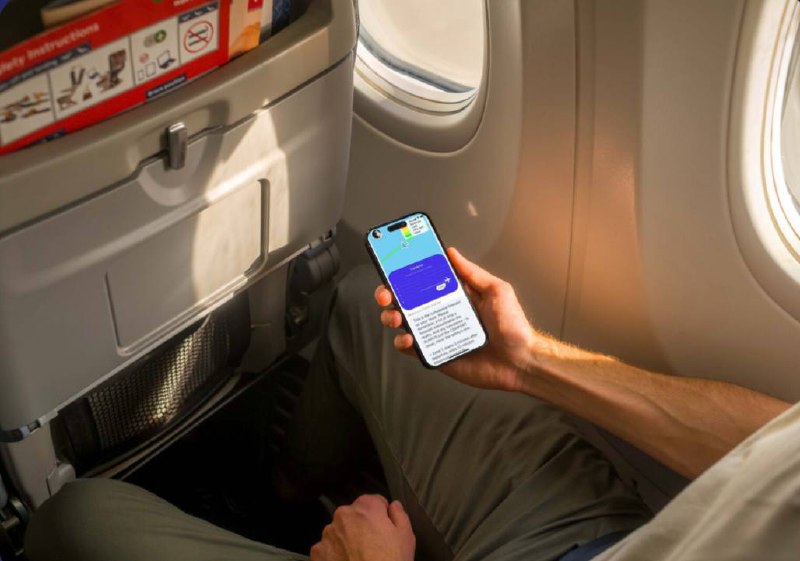
25Fear of Flying Apps in 2026: Complete Review - SkyGuru, SOAR, FlightPal & More
Complete review of fear of flying apps in 2026. SkyGuru, SkyBuddy, SOAR, Calm, and more compared on features, pricing, and effectiveness by pilot-psychologist Alex Gervash.
 26
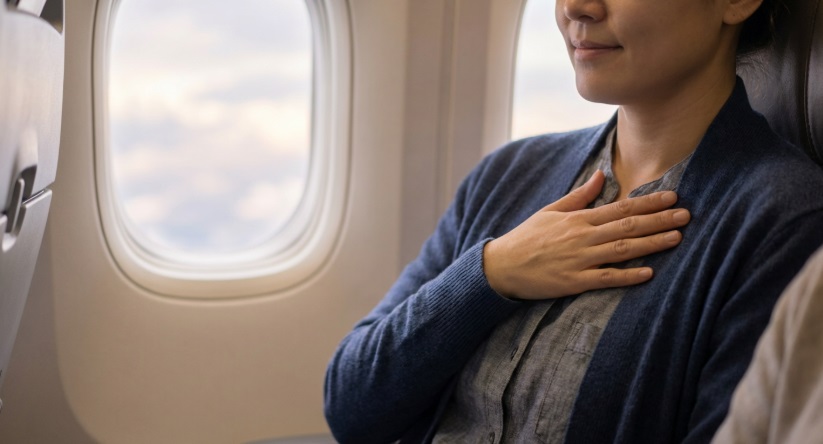
26How to Calm Down on a Plane: A Pilot-Psychologist's Emergency Guide
Practical in-flight calming techniques from a pilot-psychologist. Breathing exercises, grounding methods, nervous system regulation, and why "just relax" doesn't work. Real tools for real anxiety.
About this resource
phobia.aero Expert Team
Aviation & Psychology Specialists
- Psychology and trauma therapy professionals
- Commercial Aviation Professionals
- Fear of Flying Treatment Specialists
The phobia.aero expert team combines decades of aviation expertise with evidence-based psychological treatment methods to help people overcome fear of flying. Our multidisciplinary approach addresses the root causes of aerophobia, flight anxiety, and panic attacks through proven techniques including Somatic Experiencing®, EMDR, and autonomic nervous system regulation. With a collective track record of treating 16,000+ cases, our specialists have developed trusted resources for nervous flyers worldwide.