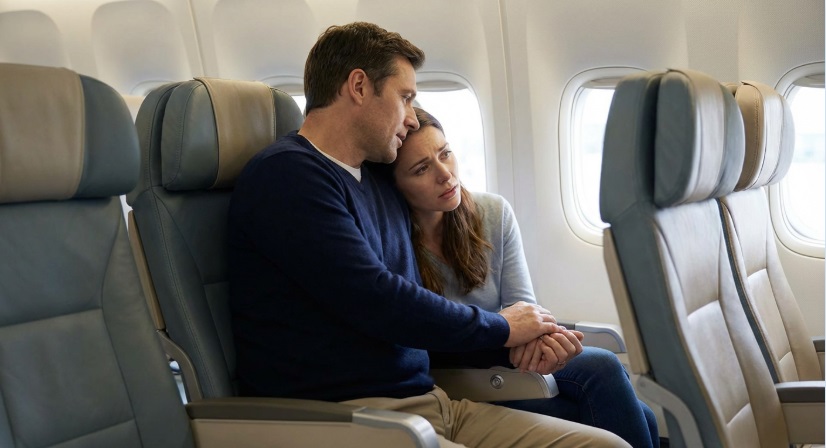
You love someone who is afraid of flying. And you do not know what to do. You have tried reasoning with them. You have shown them statistics. And none of it has worked.
You have watched them cancel vacations. Decline job opportunities. Miss family weddings. And here is what you may not be saying out loud: frustration. Your frustration is valid. And their fear is valid. Both things are true at the same time.
What You Are Up Against
Fear of flying is not a choice. Their nervous system learned that flying is dangerous. When your partner says they know flying is safe but they still cannot do it, they are telling you the exact truth. The thinking brain knows the statistics. But the amygdala does not process statistics. It processes sensations.
What Not to Do
Do not minimize the fear. "It is not a big deal" creates shame. Shame does not reduce fear.
Do not give ultimatums. Ultimatums create pressure. Pressure increases anxiety.
Do not take it personally. Their refusal to fly is not a reflection of how much they love you.
Do not become their therapist. You are their partner, not their treatment provider.
What Actually Helps
Validate their experience. "I can see this is really hard for you." You do not need to understand the fear to validate it.
Ask how you can help. Not "what can I do to make you less afraid" — instead: "what would be helpful for you right now?"
Manage your own reactions. If you are calm, they have a chance of borrowing that calm.
Be patient with the timeline. Recovery is not linear. There will be good days and bad days.
On the Airplane Together
Do not constantly ask if they are okay — it communicates anxiety. Be normally present. If they initiate conversation about anxiety, listen without trying to fix it. If turbulence happens, stay calm. Your calm nervous system is the most powerful tool available.
The most helpful thing you can do is deceptively simple: be calm, be patient, be present, and let them know that their fear does not change how you see them.