Understanding Your Nervous System and Flight Fear
Reviewed by Capt. Alex Gervash, Commercial Pilot and Fear of Flying Therapist. Last updated October 2026. Editorial standards.
How your body creates fear - and how to work with it, not against it
Fear of flying is not a thinking problem - it is a nervous system response. This guide explores how your autonomic nervous system drives anxiety, panic, and freeze responses during flight, and offers evidence-based somatic strategies for regulation.
Key Takeaways
- 1Fear of flying is a nervous system response, not a thinking problem.
- 2Your body's danger detection system (neuroception) can trigger fear without any real threat.
- 3Polyvagal theory explains why you freeze, panic, or shut down during flight.
- 4Somatic regulation techniques are more effective than logical reassurance.
- 5Working with your body is the key to managing in-flight anxiety.
Why fear of flying is a body problem, not a thinking problem
You already know flying is statistically safe. You read the stats, you nod, you board the plane. And then your body files its own report.
Here is the thing. Anxiety does not live in the part of the brain that reads statistics. It lives in the autonomic nervous system. That system is constantly scanning the environment for threat, below your conscious awareness. The neuroscientist Stephen Porges calls this scan neuroception. Inside an aircraft cabin, neuroception sees a few threats at once. Confinement. Vibration. Strange sounds. No exit. The system flips into a survival state before the thinking brain even knows.
This is also why telling yourself "flying is safe" rarely lands. The data is correct. IATA's 2024 Annual Safety Report puts commercial aviation at roughly one accident per 1.26 million flights. The driving you did to the airport was the dangerous part. Your body knows none of this. Your body knows the seat belt, the engine hum, the dip during a bump. It reads sensations, not papers.
Polyvagal Theory, also Porges, explains the rest. The vagus nerve drives three survival states. A calm, connected state. A sympathetic fight-or-flight state. And a dorsal-vagal shutdown state, where you go quiet and far away. Which one wins on any given flight is decided in milliseconds by your body, not by your reasoning. This is why two passengers on the same flight, in the same row, can have completely different experiences.
The way out is not arguing with the body. It is working with it. Paced breathing. Grounding through the feet. Slow exhale longer than the inhale. EMDR or Somatic Experiencing for older patterns underneath. The articles below break down each piece.
Frequently Asked Questions
Why doesn't "flying is safe" stop my anxiety?
Because anxiety does not live in the part of your brain that processes statistics. It lives in your autonomic nervous system, which reads sensations, not facts. Vibration. Confinement. No escape. The body has to feel safe before the logic can land. Body-based techniques, slow exhale, grounding, somatic regulation, tend to outperform reassurance once fear is already firing.
What is neuroception?
A term from Polyvagal Theory, coined by the neuroscientist Stephen Porges. Neuroception is how your nervous system scans the environment for cues of safety or threat without your conscious involvement. Inside a plane, neuroception picks up several threat-like cues at once, confined space, unfamiliar sounds, no exit, and shifts you into a survival state before the thinking brain notices.
What is Polyvagal Theory and why does it matter for flight fear?
Polyvagal Theory explains how the vagus nerve runs three different survival states. A calm, socially connected state. A sympathetic fight-or-flight state. A dorsal-vagal shutdown state where you go quiet and far away. Which one you fall into on a flight is decided in milliseconds by your body. Polyvagal-informed work teaches you to track and shift these states on purpose.
Is fear of flying genetic?
Anxiety sensitivity has a partial genetic component. Fear of flying specifically is not inherited as a single trait. What often gets passed down is a parent's anxious flying behavior. A child of a fearful flyer learns, without being told, that planes are something to brace against. That can be unlearned at any age with the right approach.
Can medication fix fear of flying?
A short-acting anxiolytic, prescribed by your physician for occasional flight use, can take the edge off in the moment. It does not change the underlying nervous-system pattern. Most clients want a longer-term answer that does not require a pill for every flight. That means working with the body itself, through somatic regulation, EMDR, or Polyvagal-informed therapy.
What is somatic regulation, in plain English?
A set of body-based practices that signal safety back to the nervous system. Slow exhales. Grounding through the feet. Orienting to the space around you. Gentle movement. It works because the nervous system processes safety through sensation, not thought. A few minutes of intentional regulation can shift you out of fight-or-flight without any cognitive work.
Sources & References
Claims in this guide are drawn from the following primary sources. Where a number, statistic, or safety claim appears above, it is traceable to one of these references.
- The Polyvagal Theory: Neurophysiological Foundations of Emotions, Attachment, Communication, and Self-Regulation. Stephen W. Porges, W. W. Norton & Company,
- Annual Safety Report 2024. International Air Transport Association (IATA). www.iata.org/en/programs/safety
Articles in This Guide
 1📖 Long Read
Your Nervous System Is Not Broken: A Pilot-Therapist's Guide to Understanding Flight Anxiety
You are not crazy. You are not weak. Your nervous system is not broken. It is doing exactly what it was designed to do. A pilot-therapist explains why fear of flying is almost never about flying.
 2
2Neuroception: Why Your Body Screams Danger When Your Mind Knows You're Safe
Neuroception is your nervous system's subconscious scanning for danger - it always wins over logic. The solution isn't more facts, but becoming aware of this automatic system.
 3
3State Determines Story: How Your Nervous System Writes Your Flight Narrative
Same turbulence, two different experiences - the difference is your nervous system state. State determines story, not the other way around. Change the state and the story shifts naturally.
 4
4The Polyvagal Ladder: Your Roadmap Out of Panic
The Polyvagal Ladder is a visual tool showing three nervous system states. You can't jump from shutdown to safety - you must climb one rung at a time using specific regulation techniques.
 5
5Interoception: The "Observation Tower" That Changes Everything
Interoception - your awareness of bodily sensations - is your "observation tower" for nervous system regulation. The key is to befriend and attend to sensations without judgment.
 6
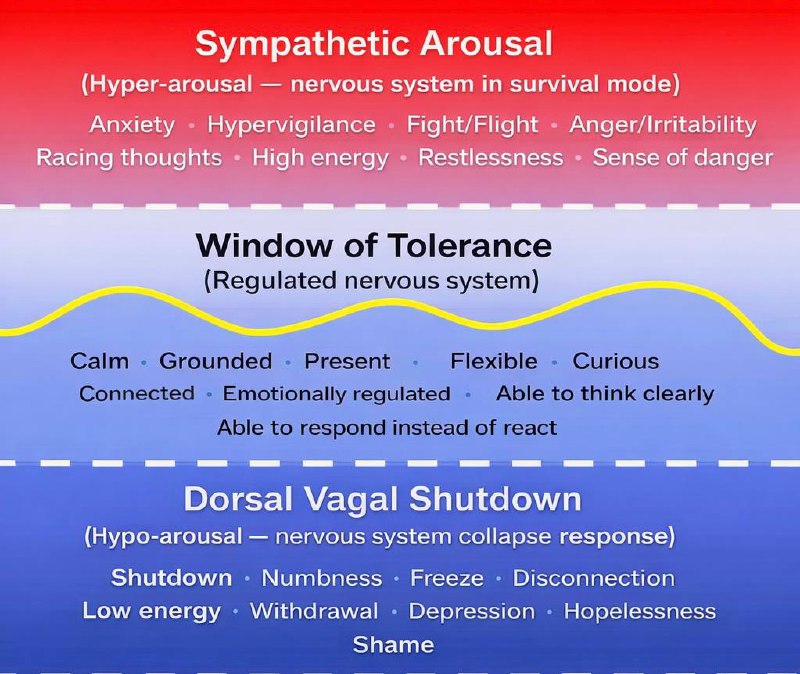
6The Window of Tolerance: Why You Snap So Easily
Why your nervous system snaps so easily in airports—and how widening your Window of Tolerance is the real goal of therapy.
 7
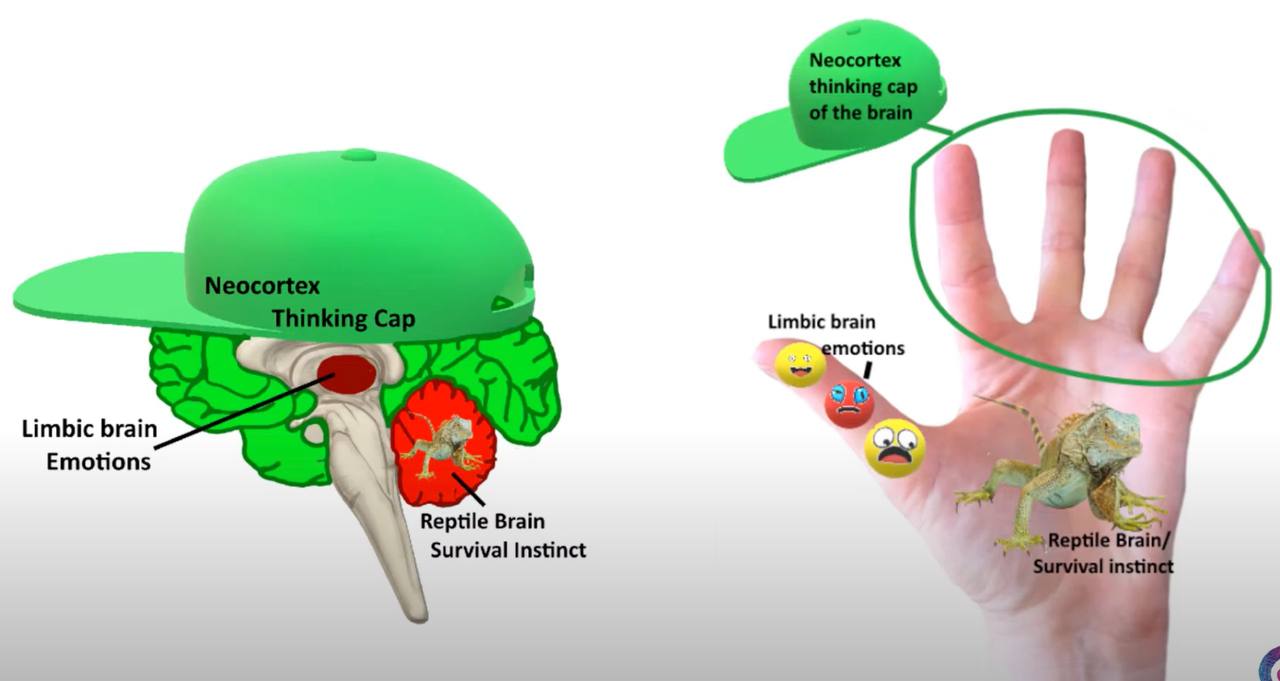
7The Hand Model: Who is Flying the Plane (In Your Head)?
Understanding why the amygdala hijacks your brain 80x faster than logic can respond—and why you can't think your way out of panic.
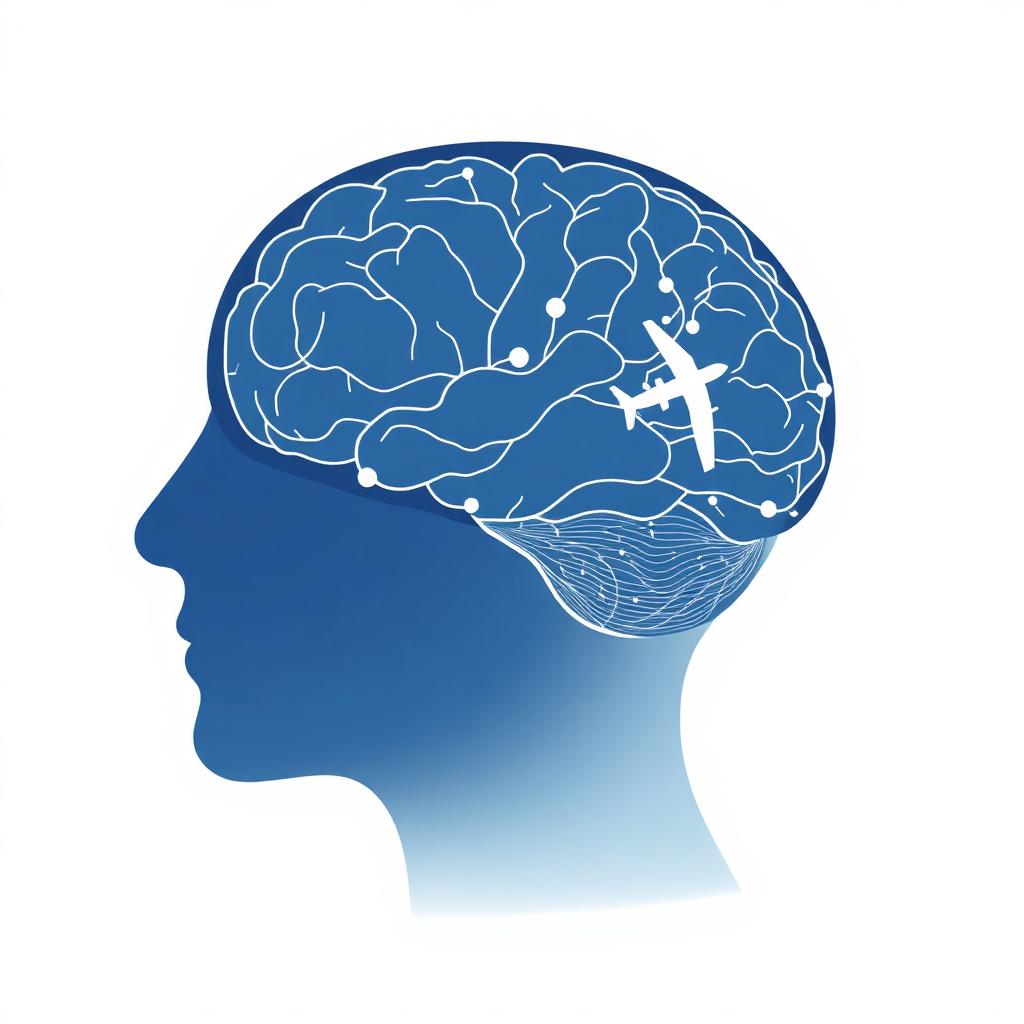 8
8Why Your Brain Goes Offline During Takeoff
According to Polyvagal Theory, when we perceive danger during flight, our thinking brain literally goes offline. Understanding which nervous system state you're in is the first step to climbing back to safety.
 9
9Your Body is Your Co-Pilot: A Somatic Guide to Managing In-Flight Anxiety
Move beyond "just relax" with professional, physiological tools to process fear using your body's own mechanisms to self-regulate.
 10
10Why "Just Relax" Doesn't Work
Why traditional CBT fails for fear of flying—and how somatic, body-based approaches work when your thinking brain goes offline.
 11
11Body Sensations: Why Your Heart Pounding Isn't Danger
You interpret a racing heart as a sign of imminent collapse. These are not symptoms of dying—they are symptoms of a body preparing to survive.
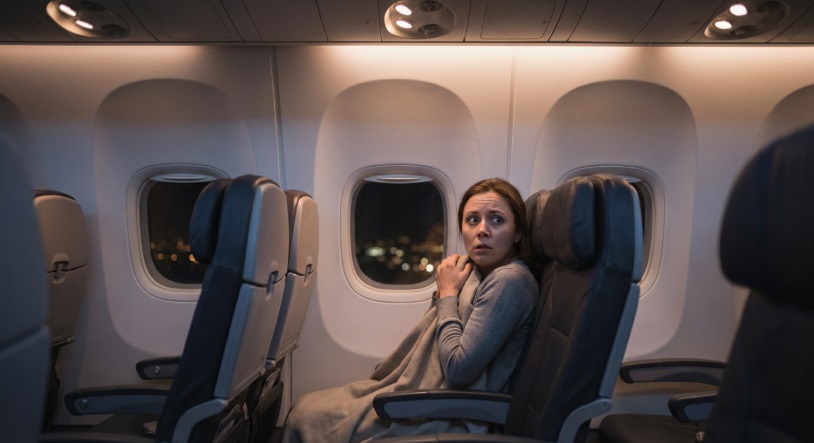 12
12When Fear Becomes Your Body, Not Your Mind
About 30% of people with fear of flying aren't afraid of crashing - they're afraid of their own bodies.
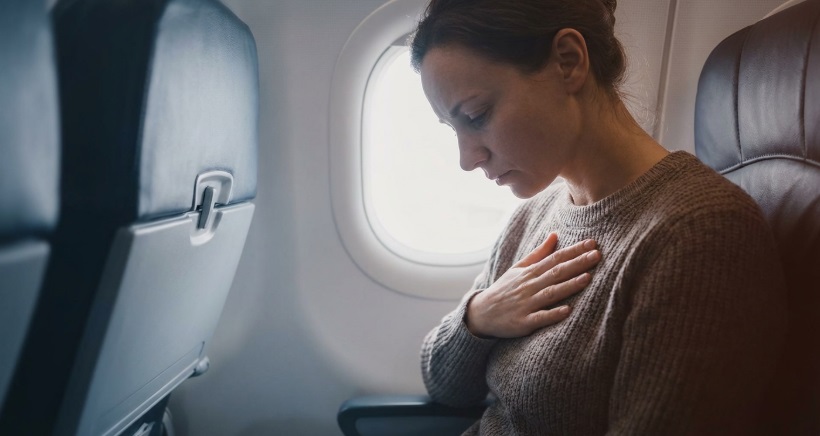 13
13When Fear of Flying is Really Fear of Your Own Body
In about 30% of cases, people who are afraid of flying are not afraid of something happening to the plane. Their fears have to do with their bodies.
About this resource
phobia.aero Expert Team
Aviation & Psychology Specialists
- Psychology and trauma therapy professionals
- Commercial Aviation Professionals
- Fear of Flying Treatment Specialists
The phobia.aero expert team combines decades of aviation expertise with evidence-based psychological treatment methods to help people overcome fear of flying. Our multidisciplinary approach addresses the root causes of aerophobia, flight anxiety, and panic attacks through proven techniques including Somatic Experiencing®, EMDR, and autonomic nervous system regulation. With a collective track record of treating 16,000+ cases, our specialists have developed trusted resources for nervous flyers worldwide.