The goal of this guide is to move beyond "just relax" and provide you with professional, physiological tools to process fear.
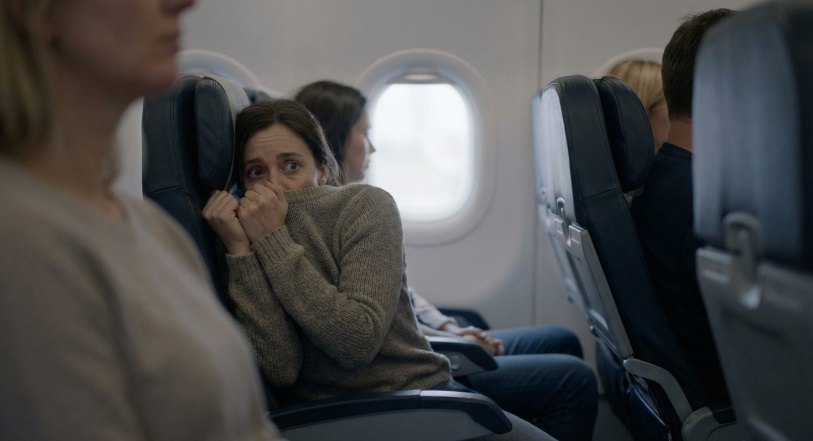
When we talk about fear of flying, we often try to analyze it with logic: "Is the plane safe?" "What was that noise?" But true anxiety lives in the body, not just the brain.
This guide helps you shift focus from thinking to feeling, using your body's own mechanisms to self-regulate.
1. The Goal: Management, Not Erasure
The biggest trap for a fearful flier is trying to force themselves to be "calm."
A healthy nervous system isn't one that feels nothing; it is one that can handle what it feels. If you are afraid, that is just fear. If you are angry, that is just anger.
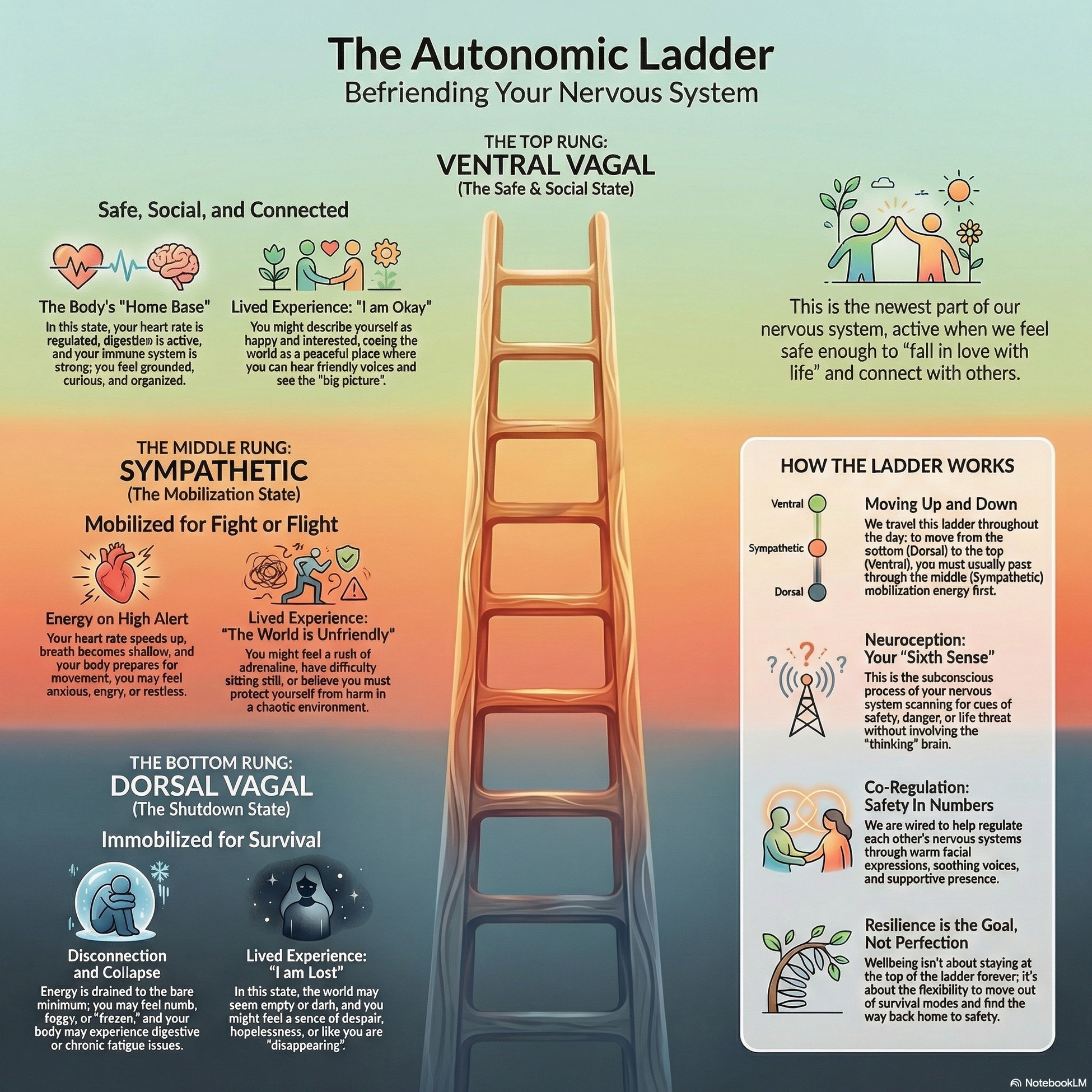
The Key Insight: Every emotion is a physical sensation (activation). For those with flight anxiety or past trauma, the nervous system misinterprets these physical sensations as a current threat.
- A tight chest is not a heart attack—it is a defensive muscle contraction.
- Sweaty palms are not a sign of doom—they are a biological cooling mechanism.
We do not fight these symptoms. We use them to complete the cycle and release the tension.
2. Recognizing "Discharge" (The Release)
We are looking for Discharge—the moment the nervous system releases excess energy. You know the technique is working when you experience:
- A spontaneous deep sigh or exhale.
- Tears (streaming, not sobbing).
- Yawning.
- Trembling, shaking, or tingling in the hands or feet.
- A wave of heat or sweat.
- Stomach gurgling.
Here are four progressive steps to achieve this. Start with Step 1; only move to the next if you don't feel relief.
Step 1: The Observer (Organic Discharge)
Success Rate: ~60%
Select the strongest physical sensation you feel right now (e.g., a knot in the stomach, tightness in the throat).
- Time: Give it 10 seconds to 10 minutes.
- Attention: Focus 100% on the physical sensation, not the "scary thoughts" attached to it.
- Curiosity: Ask, "What does this actually feel like? Is it hot? heavy? sharp?"
- No Pressure: Do not try to force it away. Paradoxically, the moment you stop trying to fix it and just "observe" it, the body often lets it go.
Step 2: Pendulation (The Rocking Technique)
Success Rate: ~80%
If observing didn't work, we help the nervous system "rock" out of its frozen state.
- Find the Safe Spot: Scan your body for a place that feels neutral or good. (e.g., "My chest is tight, but my left knee feels normal," or "My hands are cold, but my stomach feels warm.")
- Swing Attention:
- Focus on the uncomfortable symptom for 15–30 seconds.
- Shift focus to the neutral/safe spot for 15–30 seconds.
- Repeat: Do this back and forth for about 5 minutes. This rhythm reminds your brain that not all of you is in danger.
Step 3: The Antidote (Visualisation)
Success Rate: ~90%
If the sensation persists, use your imagination to alter the physical reality.
- Objectify the Fear: If you had to draw the sensation (e.g., the lump in your throat), what would it look like? Is it a black stone? A jagged piece of metal? A heavy slab?
- Create the Antidote: Imagine the exact opposite object. If the fear is a black stone, the antidote might be white, fluffy cotton candy or a warm, dissolving vitamin.
- Replace: Visualize the Antidote replacing the Fear Object. Watch how it dissolves, expands, or lightens the sensation in your body.
Step 4: Brainspotting (Deep Processing)
For the remaining 10%
Where you look affects how you feel. This technique finds the eye position that connects directly to the anxiety part of the brain.
- Find the Spot: Keeping your head still, slowly move your eyes (left, right, up, down). Find the specific point in your visual field where the body sensation feels strongest.
- Fixate: Hold your gaze on that spot (a pattern on the seatback, a screw on the wall).
- Wait: Stare at that spot until you feel a shift—a yawn, a sigh, or a reduction in tension.
Note: This can be intense. If you feel panic rising, switch your gaze immediately to a "Resource Spot"—a visual point where you feel calmest—or use the 5-4-3-2-1 grounding technique.
3. When You Feel "Trapped": Completing the Action
In aviation, the most common trigger is the feeling of being trapped—you cannot leave the plane. This triggers a biological urge to run (Flight response), but because you are seated, the energy gets stuck in your legs (Restless Leg Syndrome or shaking).
The Solution: The Mental Sprint
- Feel the Legs: Focus on the tension or shaking in your legs. Let it build.
- Pick a Destination: Decide on a safe place in your mind (your home, a beach, a meadow).
- Run (Mentally): When the tension peaks, vividly imagine yourself springing up and running with immense power and speed toward that safe place.
- Arrival: Imagine arriving at that safe spot.
This tricks the brain into believing you have successfully "escaped" the danger, allowing the alarm system to turn off.
A Note from the Cockpit
These methods are not magic tricks; they are neurobiological tools. They require compassion and curiosity. Do not bully your nervous system into relaxing. Instead, be the calm Captain of your own body: observe the turbulence, make the necessary adjustments, and trust that the weather will eventually clear.