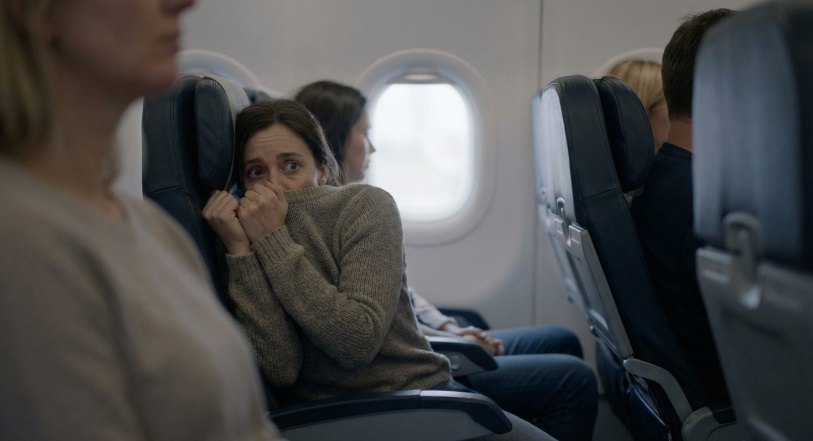
📖 Same plane. Same turbulence. Two completely different experiences.
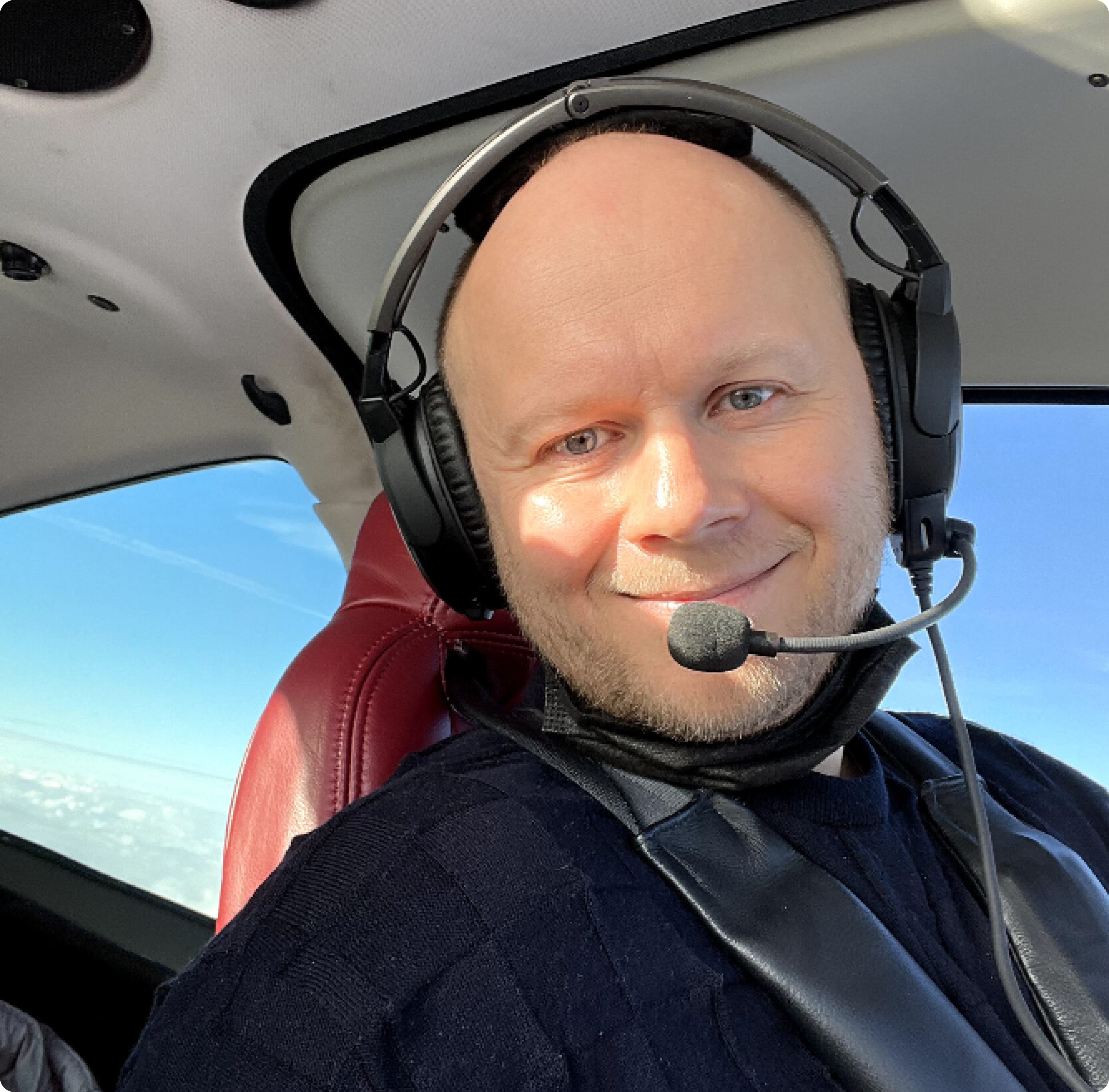
Person A: "Oh, a bit bumpy! The pilots have this handled."
Person B: "WE'RE GOING TO CRASH! THIS IS IT!"
What's the difference?
Their nervous system STATE.
This is one of the most powerful insights from Polyvagal Theory:
→ Your state determines your story. Not the other way around.
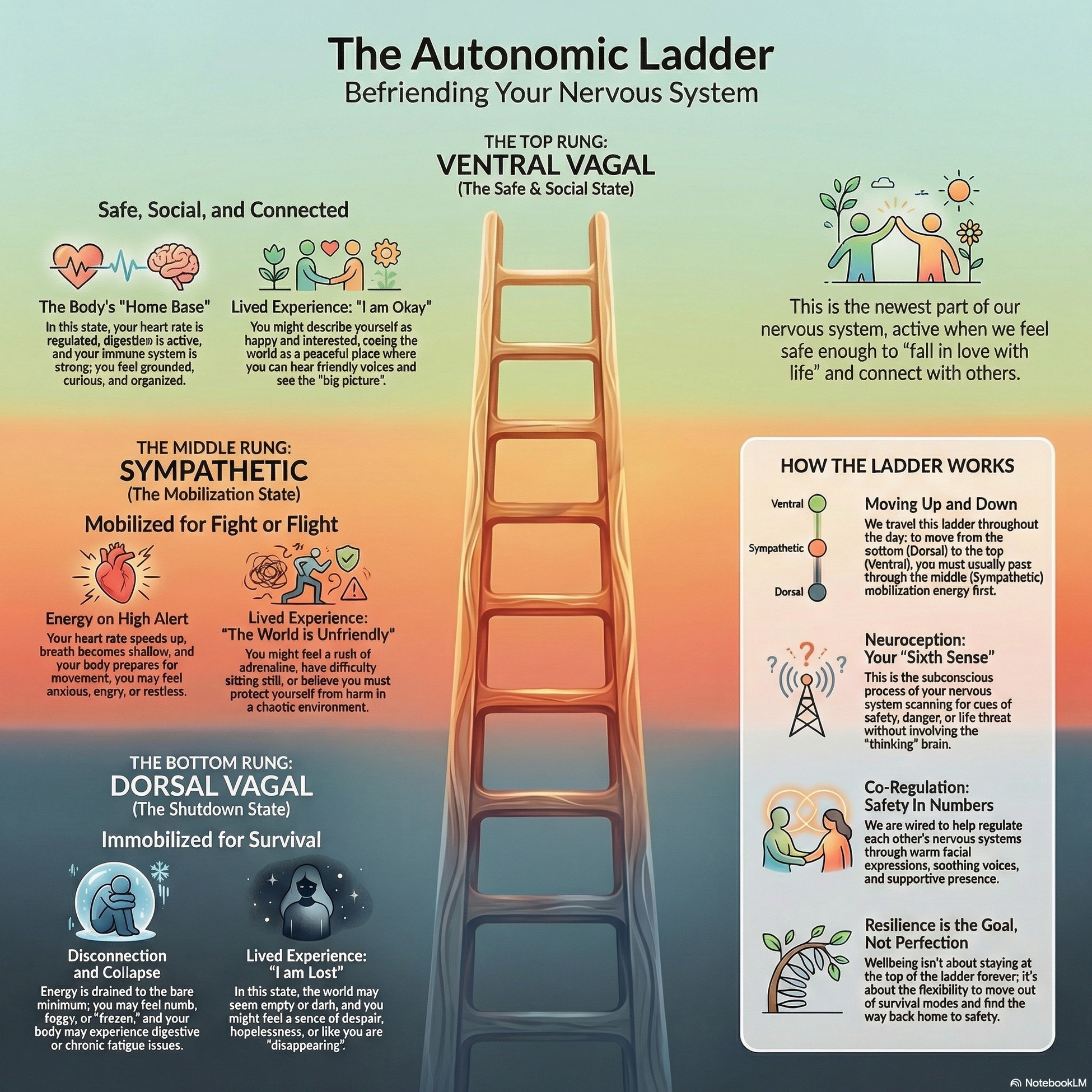
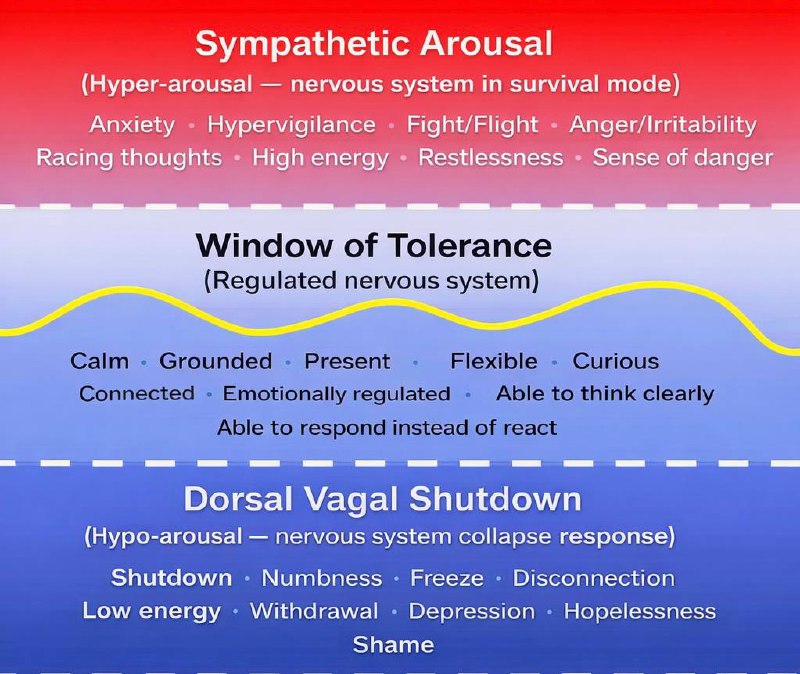
When you're in VENTRAL VAGAL (safe state):
- You interpret turbulence as normal
- You trust the pilots
- You can access rational thoughts
- Your story is: "This is uncomfortable but okay"
When you're in SYMPATHETIC (fight/flight state):
- You interpret every sound as danger
- You're hypervigilant for threats
- Your thoughts race with worst-case scenarios
- Your story is: "Something is very wrong"
When you're in DORSAL VAGAL (shutdown state):
- You feel hopeless and disconnected
- Nothing helps, nothing matters
- Your story is: "I can't handle this, I'm broken"
The breakthrough?
You can't think your way out of a nervous system state.
But once you SHIFT your state (even slightly), your story automatically changes.
This is why:
- ❌ Telling someone "just relax" doesn't work
- ❌ Reciting safety statistics doesn't help
- ❌ Trying to logic away the fear fails
✅ But regulating your nervous system FIRST - then the story shifts naturally.
Deb Dana calls this the "Story-Follow-State Approach."
Change the state → The story changes → The experience changes.
So next time panic hits at 30,000 feet, ask yourself:
"What state am I in right now?"
Not "What's wrong with me?" Not "Why can't I just be normal?"
Just: What state?
That question alone begins to shift you back toward safety.