The answer is yes and no - especially for anxious people.
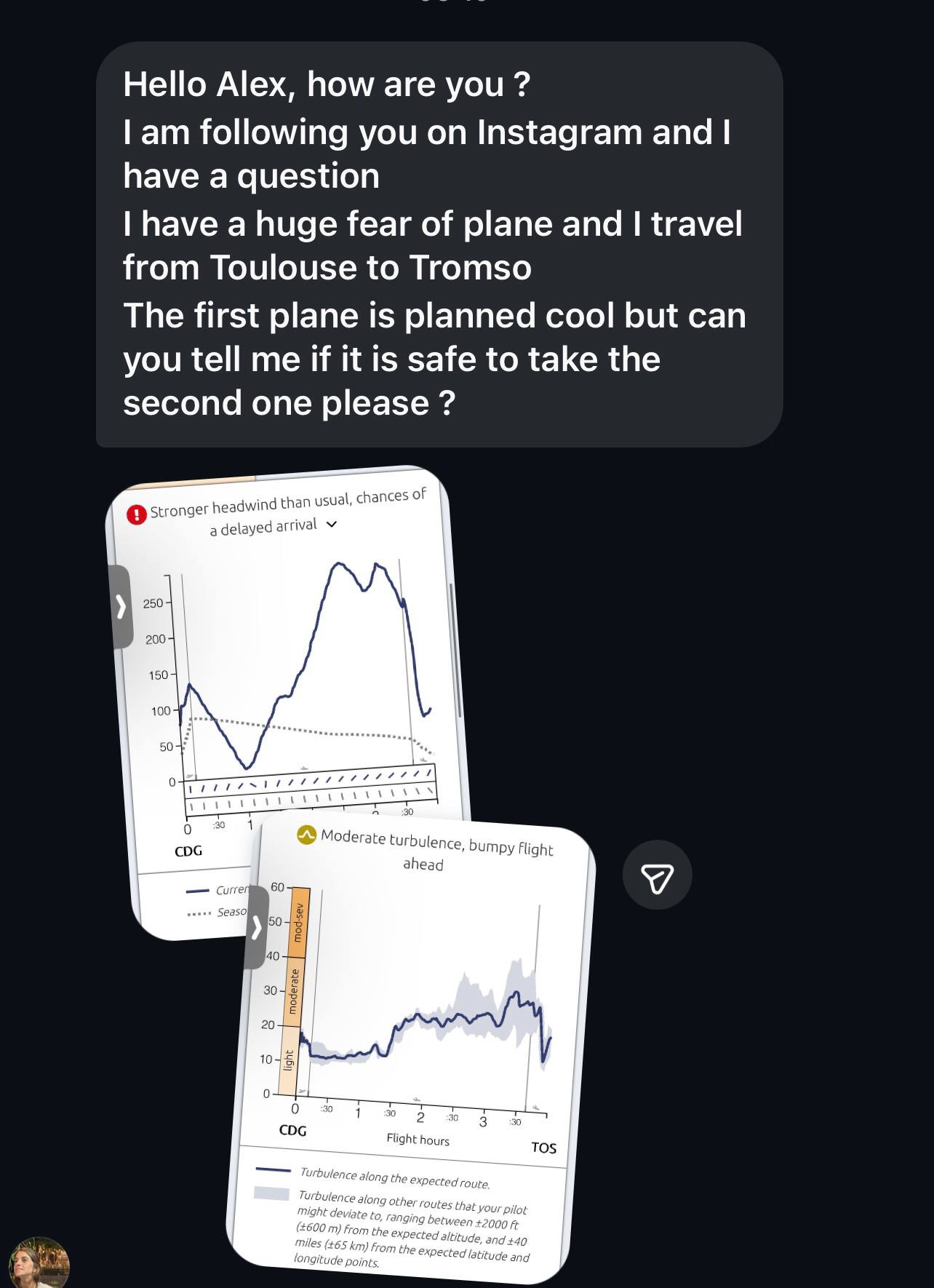
Yes: because unpredictability is one of the strongest triggers for fearful fliers. Knowing what to expect helps reduce anxiety. Forecasts create a sense of control and cut down on that unpredictable element.
No: and here’s why:
Forecast accuracy is still pretty low, around 51–53%. That’s barely better than flipping a coin. ⠀
If you see “moderate” or “severe” turbulence in the forecast, you might cancel the flight. The brain rewards that avoidance with relief chemicals (dopamine and endorphins), teaching you that skipping flights equals feeling better. Over time, that cycle makes flying even harder. ⠀
If you can’t cancel, you’ll board the plane already terrified, waiting for that “bad” turbulence to hit – even if it never actually happens. ⠀
If the forecast says “smooth flight,” you might worry, “what if it’s wrong”? ⠀
And if it is wrong – if you feel bumps despite a smooth forecast, panic hits: “This can’t be turbulence; something must be wrong!” ⠀
The more mental energy you give to forecasts, expectations, and possible avoidance, the more you inflate the importance of turbulence itself. In reality, turbulence is just movement – every form of transportation shakes. For a belted passenger, turbulence is 100% safe. But giving it too much power turns a harmless shake into a monster.
So what’s the right solution?
Learn to deal with whatever happens - when it happens. That means understanding not only aviation safety but also your own mind and how to manage your reactions. You don’t need to control turbulence; you need to control your mind and body around it.
In the long run, turbulence forecasts alone can do more harm than good for someone with flight anxiety. Predictability helps, but only as part of a well-rounded, structured set of tools to manage fear.
That’s exactly what SkyGuru app does. It offers turbulence forecast but also gives in hands of fearful fliers various psychological tools. It helps fearful fliers handle turbulence not by avoiding it, but by managing their nervous system if external (or internal) turbulence hits.