The amygdala acts like a barcode scanner—it doesn't know if an event is truly dangerous, it only recognizes codes linked to memories of specific events.
The amygdala acts like a barcode scanner in a supermarket. It reads the code on a can to determine its contents. Similarly, our brain's amygdala doesn't know if an event is truly dangerous—it only recognizes the codes linked to memories of specific events.
For example, consider a child whose father was an alcoholic. His behavior was unpredictable: safe and stable when sober, but angry and abusive when drunk. The child lived in constant uncertainty. This instability could be encoded as "danger" by a young, developing brain.
Fast forward to this individual in their 20s. Turbulence begins unexpectedly during a flight, shifting from smooth to bumpy—mirroring the shift from a sober to a drunk father. The turbulence feels unstable and subconsciously recalls the dangerous instability of their childhood.
In Short
The amygdala acts like a barcode scanner—it doesn't know if an event is truly dangerous, it only recognizes codes linked to memories of specific events.
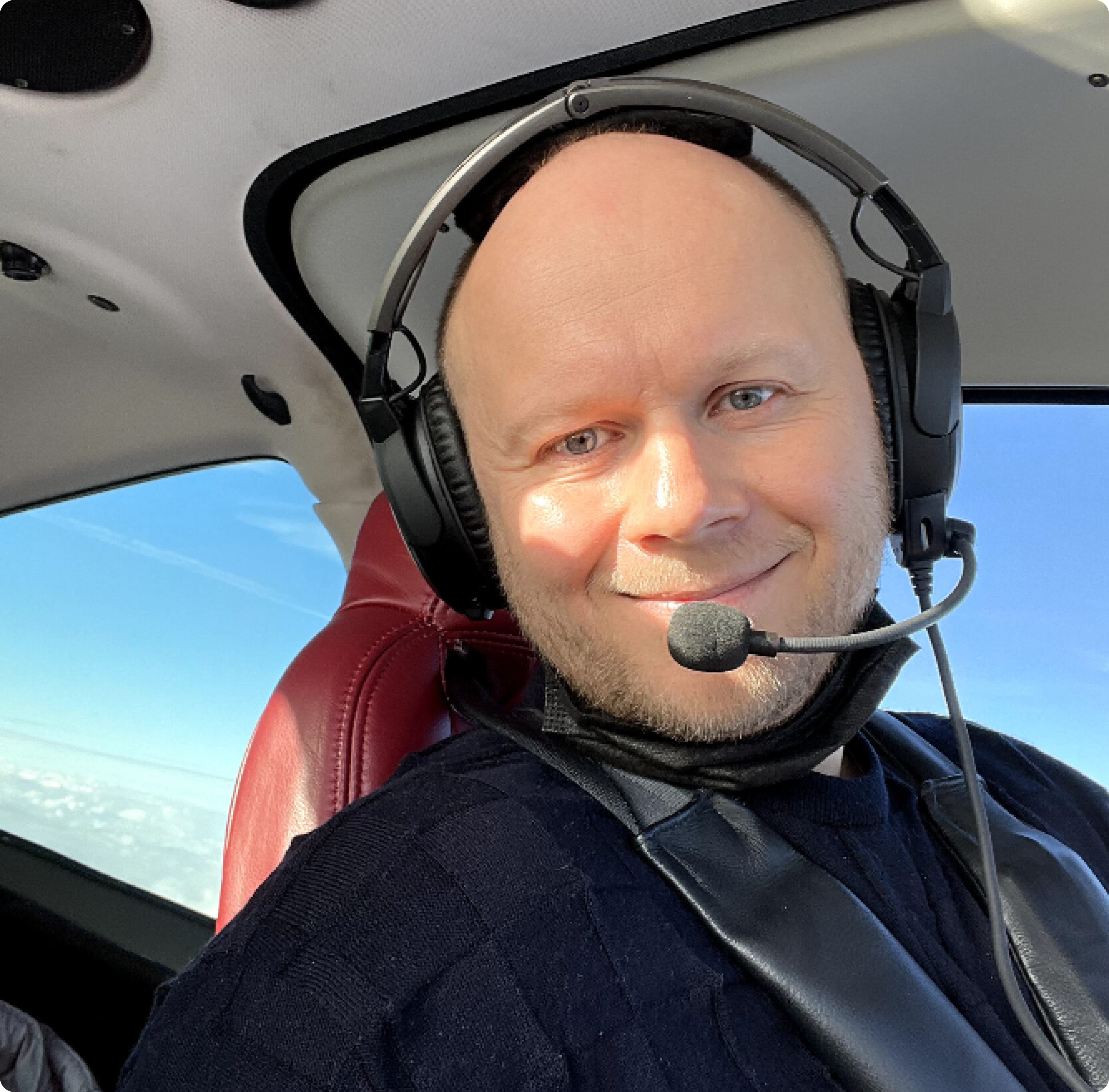
Trained in psychology and trauma therapy (EMDR, Somatic Experiencing)
Founder of phobia.aero & SkyGuru App
Alex Gervash is a distinguished psychology and trauma therapy specialist who bridges the gap between aeronautical science and mental health. With 31 years of aviation experience, he provides a unique pilot perspective that helps individuals navigate the complexities of aerophobia therapy and airplane phobia. His methodology blends Somatic Experiencing and polyvagal theory with EMDR therapy to address the root causes of panic attacks on planes, having successfully guided over 16,000 clients to overcome fear of flying. Whether acting as a virtual flight companion or providing expert in-flight support, Alex offers a transformative flight fear treatment for those trapped by a persistent flying phobia. Through his evidence-based approach, he empowers travelers to reclaim the skies and master their fear of flying for good.