The Science Behind Low-Level Bumps
This type of turbulence arises due to differences in airspeed and wind direction. These differences can occur due to several factors, such as uneven heating of the Earth's surface, variations in temperature and humidity in the air, and geographical features of the terrain.
When and Where It's Most Common
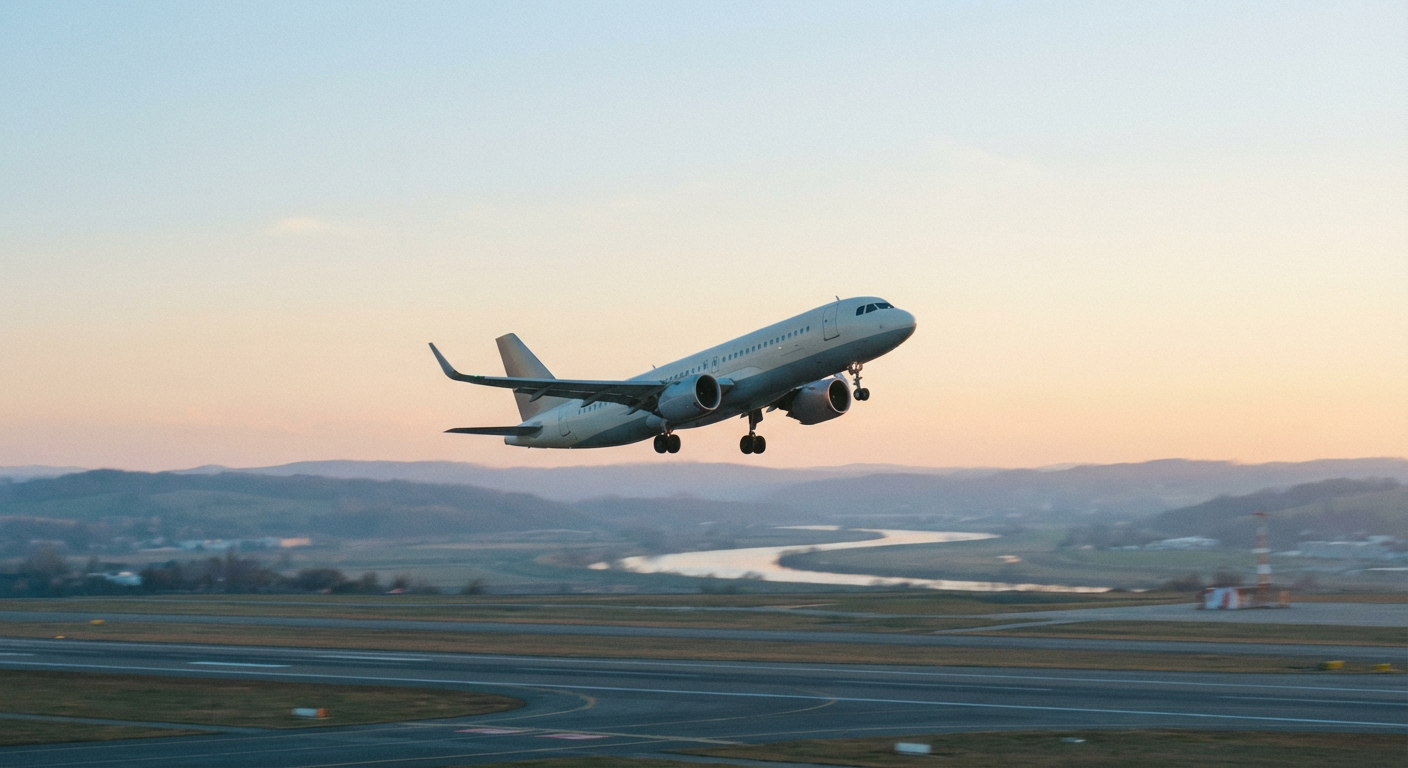
Low-level turbulence is especially noticeable during the daytime, in warm seasons, and in locations where airports are near bodies of water and/or mountains.
For example, let's consider the airport in Nice, where it is surrounded by the waters of the Mediterranean Sea on one side and by mountains on the other, and it can get quite hot in the summer. These factors create conditions for the mixing of air masses and the occurrence of turbulence.
The Bumpy Road Analogy
A good analogy to understand this phenomenon is to think of it as driving on a bumpy road, where your car may sway a bit, but it doesn't mean there is any danger.
Engineering Margins
It's important to understand that aircraft are designed and built to withstand much stronger forces than those generated by turbulence. Aircraft are designed to handle flights in turbulent conditions with forces up to 5G, whereas in real conditions, turbulence rarely exceeds 1.5G.
Measure It Yourself
To measure the turbulence level, simply place your phone on any horizontal surface during the flight, such as a table or the armrest of a chair. The sensor measures and displays turbulence readings in real-time.