What is turbulence — the short answer
Turbulence is irregular movement of air around an aircraft — caused by jet streams, weather systems, mountain wave activity, or wake from the aircraft ahead of you. To passengers it feels like bumps, drops, or side-to-side motion. To pilots it is a routine event, more like potholes on a road than anything dangerous. Modern commercial airliners are engineered to handle forces far beyond anything they will ever encounter in service.
According to the U.S. Federal Aviation Administration (FAA), aircraft structures are certified to withstand 1.5 times the maximum aerodynamic load they will ever encounter in operation. Wings are tested to flex up to 90 degrees during certification without breaking. The U.S. National Transportation Safety Board (NTSB) records confirm that turbulence has not caused the structural failure of a modern commercial airliner. The risk to the airframe is essentially zero — the discomfort is in your nervous system, not in the aircraft.
Most injuries reported in turbulence happen to people not wearing their seat belts. The FAA's standing recommendation is to keep your belt fastened whenever you are seated, even when the seat-belt sign is off. Pilots and dispatchers actively route around forecast turbulence using the FAA's Aviation Weather Center and the Graphical Forecasts for Aviation (GFA).
If turbulence affects you anxiety-wise rather than physically, that is normal — and treatable. Fear of turbulence usually reflects a misfiring threat response in the nervous system, not a real danger from the air. The pages linked below cover, in detail, what turbulence is, what it does (and doesn't do) to a plane, why pilots stay calm during it, and what you can do to ride it through more comfortably.
Frequently Asked Questions
Is turbulence dangerous to the airplane?
No. Modern commercial aircraft are certified by the FAA to withstand 1.5× the maximum aerodynamic load encountered in normal operation. The NTSB has no record of a modern commercial airliner suffering structural failure from turbulence. Wings flex by design — they are tested to bend up to 90 degrees without breaking. The aircraft is not at risk; only loose objects and unbuckled passengers are.
Can a plane crash because of turbulence?
There is no recorded case of a modern commercial airliner crashing due to turbulence alone. Aircraft are designed with structural margins far beyond the worst forces ever recorded in flight. The very rare turbulence-related injuries are to people inside the cabin — not failures of the airplane itself.
Why does turbulence feel so much worse than it actually is?
Your nervous system reads sudden vertical movement and lack of control as a threat signal — a process called neuroception. The body reacts as if you are falling, even when the aircraft is rock-solid. This is a normal mammalian response. Understanding it doesn't always stop it, but body-based techniques (paced breathing, grounding, somatic regulation) can settle it down within a few minutes.
Will turbulence get worse with climate change?
Research suggests clear-air turbulence may increase moderately over coming decades as the jet stream shifts. But aircraft, route planning, and forecasting are already adapting. Even with predicted increases, the structural margin built into commercial aircraft remains far in excess of any forecast turbulence intensity.
Why do pilots stay calm during turbulence?
Because we know two things passengers don't have direct access to: (1) what the aircraft is actually doing on the instruments, and (2) what the air mass ahead is forecast to do over the next 5–30 minutes. From the cockpit, turbulence is information, not threat. It tells us to slow down, change altitude, or warn the cabin — same as a driver seeing a rough patch of road and adjusting speed.
What should I do as a passenger when turbulence starts?
Stay seated and buckled. Look at a fixed point or close your eyes. Slow your exhale — make it longer than your inhale; this shifts the nervous system out of threat mode. Avoid focusing on the sensations in your stomach; instead notice neutral sensations, like the contact of your feet with the floor. If you have severe anxiety, learning a body-based technique in advance (somatic regulation, polyvagal-informed practice) is more effective than trying to "talk yourself out of it" mid-flight.
Turbulence is probably the reason you are reading this right now. It is the single most common trigger for flight anxiety. The plane shakes. Your stomach drops. Your hands grip the armrests. Your mind races to the worst possible scenario. You look around the cabin for signs of panic on other faces. You watch the flight attendants. You hold your breath.
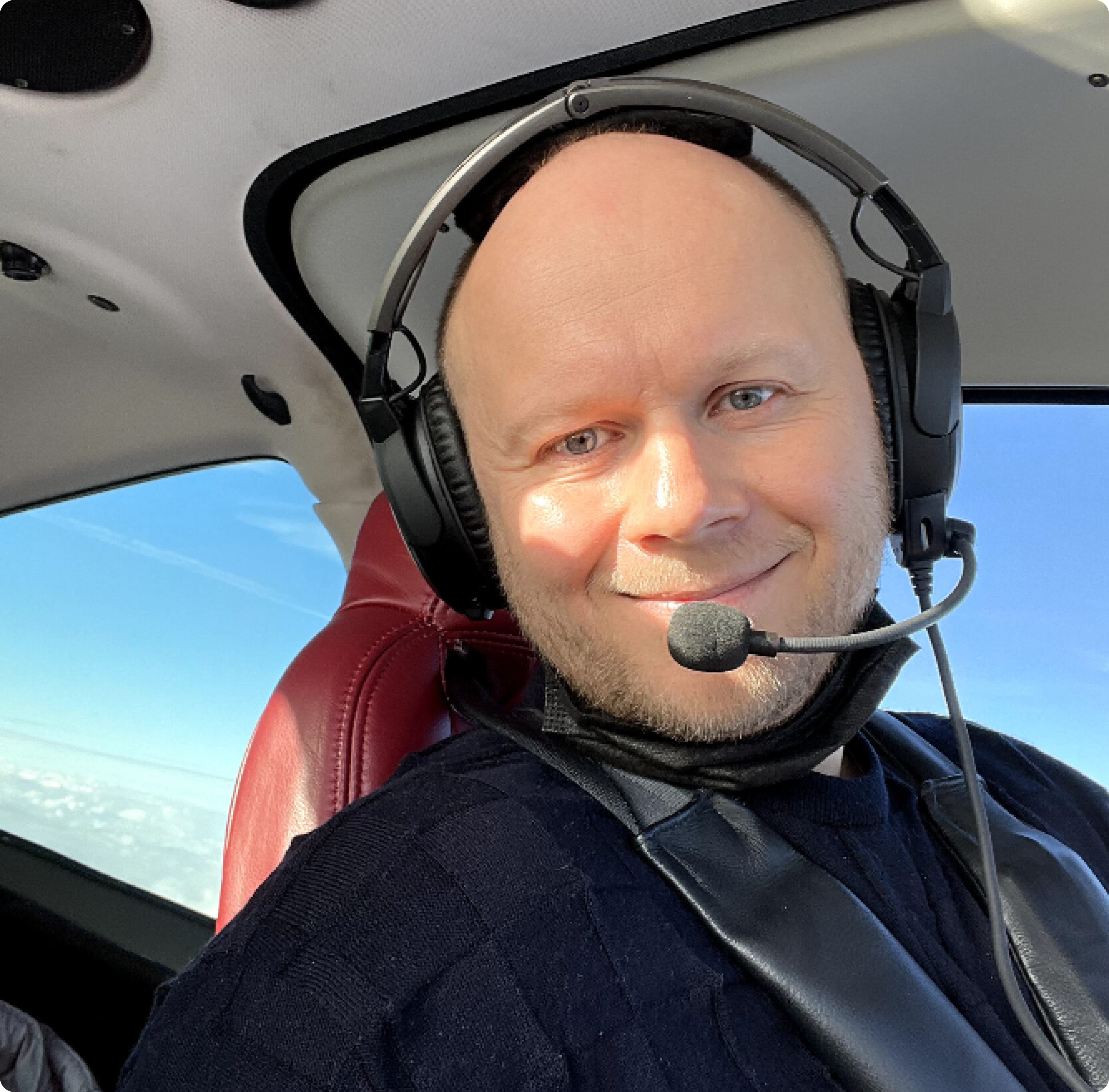
I have been a pilot for thirty-one years. I have flown through every type of turbulence that exists. And I need to tell you something that might be hard to believe right now: in the entire history of modern commercial aviation, turbulence has never caused an airplane to crash. Not once. This is not an opinion. It is a documented fact from aviation safety databases maintained by the NTSB and the FAA.
What Turbulence Actually Is
Turbulence is not what you think it is. Your brain tells you that the airplane is being thrown around by some violent external force. That the air is attacking the plane. That the structure is being tested to its limit. None of this is true.
Turbulence is simply irregular movement of air. Think of the ocean. On a calm day, the surface is smooth. On a stormy day, there are waves. The water is the same water. It has simply changed its pattern of movement. Air works the same way.
Now think of a fish in the ocean during a storm. The waves might be enormous. Does the fish get hurt? Does the fish get thrown out of the water? No. The fish moves with the water because it is suspended inside the water. An airplane in turbulence works exactly the same way. The airplane is not sitting on top of the air like a boat on water. It is suspended inside the air. When the air moves, the airplane moves with it.
The Engineering That Protects You
Every commercial airplane you will ever fly on was designed and tested to withstand forces far beyond anything turbulence can produce. Before any airplane is allowed to carry passengers, it must demonstrate that its structure can handle at least 150 percent more stress than the most extreme conditions it could ever encounter. This is called the safety factor.
Wings are the part people worry about most. You see them flex and your heart rate doubles. But that flexibility is not weakness. It is engineering. A flexible wing absorbs energy. A rigid wing transmits it. In certification testing, Boeing has bent the wings of its aircraft over fifteen feet upward without failure.
What Pilots Do During Turbulence
When turbulence hits, experienced pilots often disconnect the autopilot. Not because the situation is dangerous. Because the autopilot tries too hard to fight the bumps. A good pilot does the opposite. We let the airplane ride the air. We manage speed to ensure we are within the turbulence penetration speed range, which gives the airplane maximum structural protection and the smoothest possible ride.
We are not scared. We never think the airplane is in danger. We might be annoyed that the ride is rough. But danger? No. Turbulence is an inconvenience, not a threat.
The Different Types of Turbulence
Convective turbulence happens when the sun heats the ground and warm air rises in columns called thermals. This is most common in the afternoon over land, especially in summer.
Mechanical turbulence occurs when air flows over terrain like mountains, buildings, or even the airport itself.
Clear air turbulence happens at high altitudes where different jet streams meet. This one can appear without warning because there are no clouds to signal it.
Wake turbulence is caused by the wingtip vortices of a preceding aircraft. Air traffic control manages separation distances specifically to avoid this.
Why Your Body Reacts the Way It Does
Turbulence shakes you. This physical shaking activates your vestibular system, the balance organs in your inner ear. Your vestibular system sends an urgent message to your brainstem: something is wrong. Your brainstem does not consult your prefrontal cortex. It responds with a survival reaction.
But there is a deeper layer. The physical sensation of being shaken, of feeling unstable, of not being in control of your body's movement, is a powerful trigger for something called somatic memory. Your nervous system stores memories not just as thoughts but as physical patterns. If you ever felt physically unsafe as a child, your body remembers. Turbulence can activate that old memory.
Comfort Versus Safety
This is the most important distinction I can offer you. Turbulence is a comfort issue, not a safety issue. Think about a road with potholes. Your car bounces. The coffee in your cupholder spills. It is uncomfortable. But at no point do you think the car is going to fall apart.
The seatbelt sign exists for comfort and minor injury prevention. It keeps you from bumping your head on the overhead bin during a sudden jolt. It does not exist because the airplane might come apart.
What You Can Do Right Now
- Focus on your feet. Press them into the floor. This activates the grounding circuits in your nervous system.
- Breathe out longer than you breathe in. Inhale for three counts. Exhale for six. Do this five times.
- Notice the shaking without labeling it as danger. Say to yourself: I feel movement. This is not danger.
- Look at the flight attendants. Notice how normal they look. Let their calm nervous systems co-regulate yours.
- Eat something. Eating sends a powerful safety signal to your gut. Your body knows that you do not eat when you are in real danger.
- Do not grasp the armrests — release your body. If you feel your muscles tensing up, consciously let go. Unclench your jaw. Drop your shoulders. Open your hands. Gripping creates a feedback loop: your body tenses, your brain reads the tension as danger, and the fear intensifies. Letting go sends the opposite signal — safety.
The Path Forward
Turbulence anxiety is treatable. It is not a life sentence. The path forward involves both education and body-based work. You need to understand what turbulence is so your thinking brain can stop generating catastrophic stories. And you need to teach your nervous system that the physical sensations of turbulence are safe, even though they are uncomfortable.
I have helped over sixteen thousand people with fear of flying. Many of them started exactly where you are right now. And the vast majority of them changed their relationship with flying. Not because turbulence stopped. But because they stopped interpreting it as a threat.