Something I have learned after working with over sixteen thousand fearful fliers. The fear is often not about the airplane itself. It is about the sounds the airplane makes. The unexpected clunks. The whines that change pitch. The rumbles that seem to come from nowhere.
Your nervous system is a prediction machine. It is constantly monitoring your environment, comparing what it hears right now with what it expects to hear. When the sound matches the expectation, your nervous system stays calm. When the sound is unexpected, your amygdala flags it. Your body tenses. And the cascade begins.
Before the Engines Start
The constant low hum you hear when you board is the auxiliary power unit (APU). It is a small engine in the tail that provides electrical power and air conditioning while the main engines are not running.
Thumping sounds from below are baggage handlers loading luggage. A high-pitched whine is often the hydraulic systems being pressurized. Rhythmic thumps from the belly are usually the power transfer unit, a hydraulic component that balances pressure between different systems.
Pushback and Taxi
During pushback, you may hear the main engines starting — a rising whine followed by a steady hum. Bumps during taxi are the landing gear rolling over concrete seams, just like driving over expansion joints on a highway. The steady mechanical whir is the flaps being extended for takeoff.
Takeoff
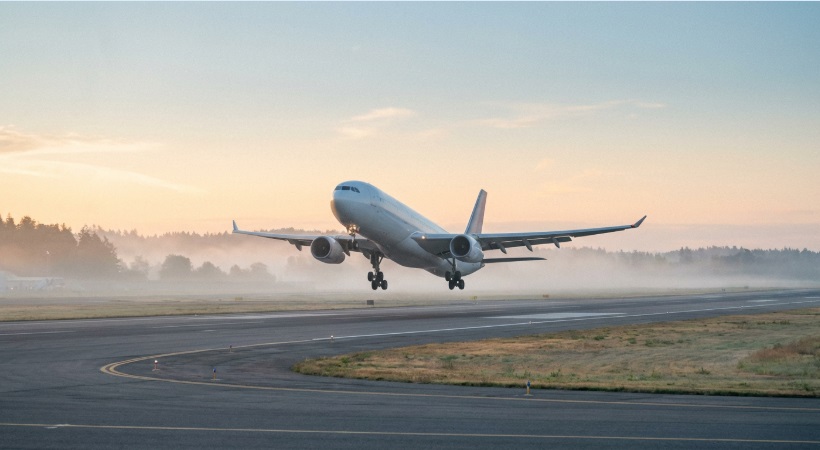
When engines advance to takeoff power, this is the loudest the engines will be during the flight. The sustained, powerful roar is completely normal — maximum thrust to reach flying speed.
At rotation, when the nose lifts, the rumbling stops instantly. Shortly after, a clunk followed by whirring is the landing gear retracting. The gear doors open, hydraulic actuators pull the gear up, then the doors close. Ten to fifteen seconds. Completely normal on every flight.
After the gear is up, engine sound decreasing is a planned power reduction. The airplane is climbing perfectly well at reduced thrust. This is not engines failing.
The Climb
You will hear several changes in engine sound as pilots adjust power. The flaps being retracted produce the same mechanical whirring in reverse. Changes in air conditioning sound are the pressurization system adjusting.
Cruise
At cruise altitude, the engine sound is a steady, moderate hum. Occasional creaks and groans are structural sounds — the aircraft skin responding to temperature differentials, similar to a house settling. If the seatbelt sign comes on, it means the pilots expect turbulence ahead. They know about it in advance.
Descent and Landing
Engine power reduces — the airplane is going downhill. Your ears may pop as cabin pressure equalizes. The landing gear extending produces the most dramatic sound: doors open with a clunk, gear drops with a thud, doors close. Vibration from the gear in the airstream is completely normal.
On landing, the roaring sound is thrust reversers deploying — engines redirecting thrust forward to help slow the airplane. Loud and dramatic, and it is supposed to be.
Why This Matters
Every one of these sounds is normal. Every one happens on every flight. Now you have the knowledge. A mysterious thump becomes the landing gear. A whine becomes the hydraulic pumps. A roar becomes the thrust reversers. Knowledge is the beginning. The nervous system work is what makes it stick.