Why traditional CBT fails for fear of flying—and how somatic, body-based approaches work when your thinking brain goes offline.
Why Cognitive Approaches Alone Are Not Enough
Cognitive Behavioral Therapy (CBT) can help with mild flight anxiety — restructuring thoughts and building rational understanding. For simple phobias, it works well.
However, for deeper fear of flying, cognitive approaches alone often fall short. Why? Because when fear escalates, the "Thinking Brain" goes offline! You cannot reason with a reptile. When you are in the "Red Zone" (panic) or "Blue Zone" (freeze), your body is holding the trauma.
We need to use "bottom-up" approaches like Somatic Experiencing. We must work with the body first.
For example, if you go into a "freeze" state (numb, quiet terror) on a plane, deep breathing might not help. You might need to physically activate your muscles. Pushing your hands against your thighs or pushing against a wall can signal to your nervous system: "I am not helpless. I can move. I am here."
In Short
Why traditional CBT fails for fear of flying—and how somatic, body-based approaches work when your thinking brain goes offline.
About the author
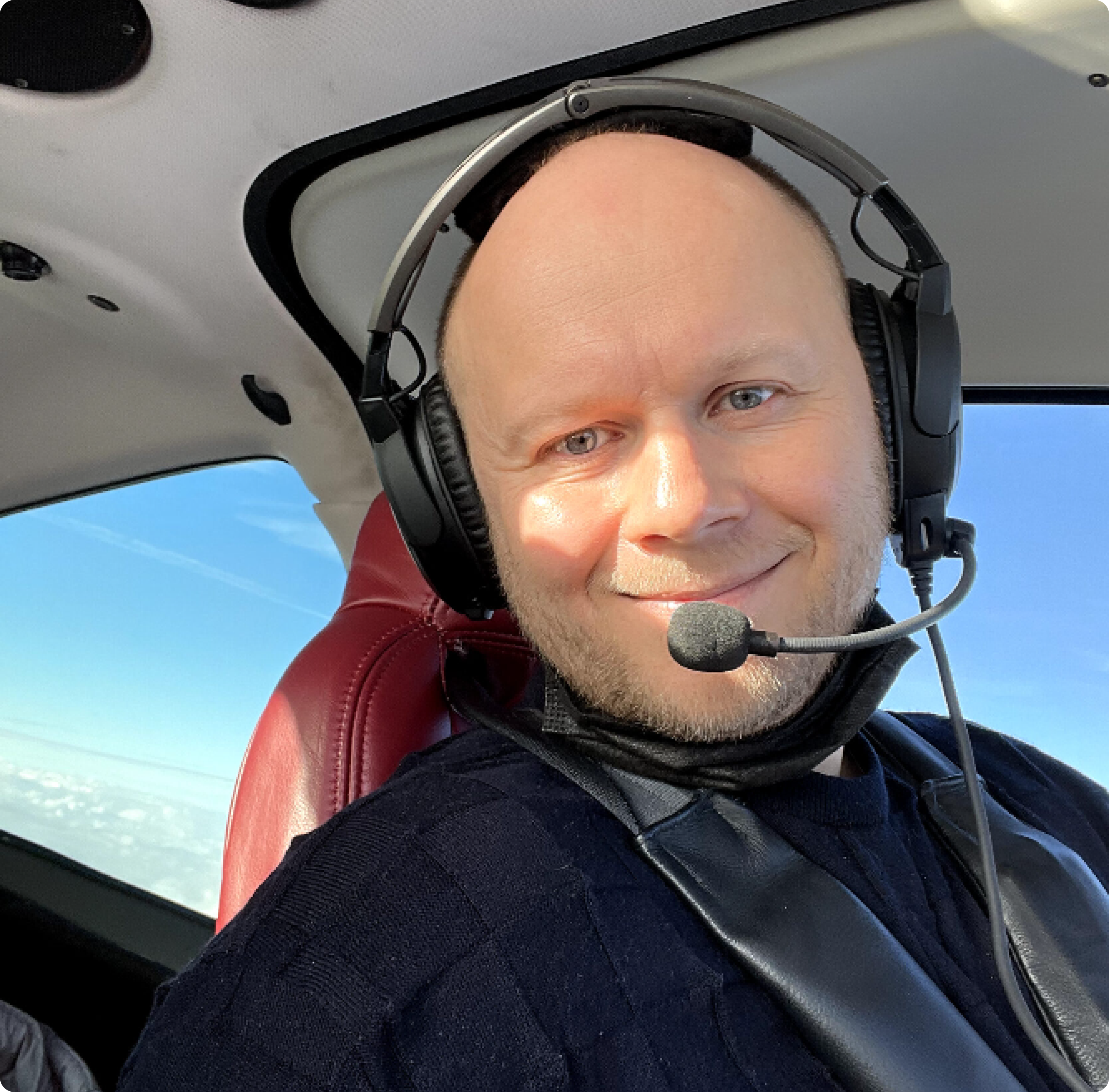
Alex Gervash
Pilot & Fear of Flying Specialist
Commercial Pilot (31 years aviation experience)
Trained in psychology and trauma therapy (EMDR, Somatic Experiencing)
Founder of phobia.aero & SkyGuru App
Alex Gervash brings a unique perspective to treating fear of flying, combining 31 years of commercial aviation experience with deep expertise in psychology and trauma therapy. His approach to aerophobia integrates Somatic Experiencing®, EMDR therapy, and polyvagal theory with comprehensive aviation knowledge. Having personally helped over 16,000 individuals overcome flight anxiety, panic attacks on planes, and turbulence fear, Alex continues to support nervous flyers worldwide through the SkyGuru flight companion app used by 200,000+ users.